

Non-Profit Case Study: Quantitative Research for Girls Who Code
Girls Who Code partnered with Touchstone Research to conduct a national study exploring the drivers and deterrents influencing teenage girls’ interest in cybersecurity careers. The research provided foundational data for the Breaking Barriers report, offering evidence-based guidance to close the gender gap in the technology workforce.
What this case study covers:
- Evaluating the “confidence divide” and sense of belonging among Gen Z teens.
- Identifying the “peak interest” window for engaging girls in cybersecurity.
- Quantifying the impact of Out-of-School Time (OST) programs on career aspirations.
Study Snapshot
- Methodology: Quantitative Research (Online Survey)
- Audience: U.S. Teens (Ages 13–18) / Gen Z
- Markets: United States
- Sample: 2,105 Participants (Nationally Representative + Program Alumnae)
The Business Challenge
This case study highlights Touchstone Research’s partnership with Girls Who Code to conduct national cybersecurity gender gap research with 2,105 U.S. teens ages 13–18. The insights informed Girls Who Code’s Breaking Barriers report, revealing opportunities to increase girls’ awareness, confidence, and interest in cybersecurity and shaping actionable recommendations for industry, education, and policy leaders.
Inside the Touchstone Research and Girls Who Code Cybersecurity Gender Gap Case Study
With only 22% of cybersecurity professionals identifying as women, the industry faces a critical innovation and national security vulnerability. Girls Who Code needed to evaluate the current state of girls’ knowledge, perceptions, and experiences regarding the field to understand why this gap persists.
The organization sought to identify:
- The specific age ranges where girls are most open to exploring cybersecurity.
- How confidence and “sense of belonging” differ between genders.
- The impact of Out-of-School Time (OST) programs on career aspirations.
- Actionable ways to frame the industry to make it more relevant to young women.
The Research Solution
Touchstone Research executed a full-service, national quantitative study targeting 2,105 U.S. teens. The study design included a nationally representative sample alongside a specific segment of Girls Who Code alumnae, allowing for robust comparisons between the general population and those with direct program exposure.
Touchstone managed the entire research lifecycle, from survey design consultation and field management to data quality assurance and strategic reporting, ensuring the findings accurately reflected authentic teen voices.
Research Design
📝 Survey Co-Development: Collaborated to design an instrument that captured nuance in awareness, interest, and confidence.
🎯 Strategic Sampling: Recruited a mix of general population teens and program alumnae for comparative analysis.
📊 Rigorous Analysis: Examined data across gender, demographics, and experience levels to pinpoint specific barriers.
💡 Strategic Reporting: Delivered visualized insights to inform the Breaking Barriers report and advocacy efforts.
Learn More About Market Research Service Levels: Full-Service vs. Flexible Market Research: Which Approach is Right for Your Business?
Why This Approach
A large-scale quantitative approach was essential to provide the statistical weight needed for national advocacy. By surveying a massive sample of Gen Z teens, the team could statistically validate the “confidence gap” and quantify the impact of intervention programs, providing Girls Who Code with the irrefutable evidence required to influence educators, policymakers, and industry leaders.
Key Insights
Insight: Awareness Does Not Equal Understanding
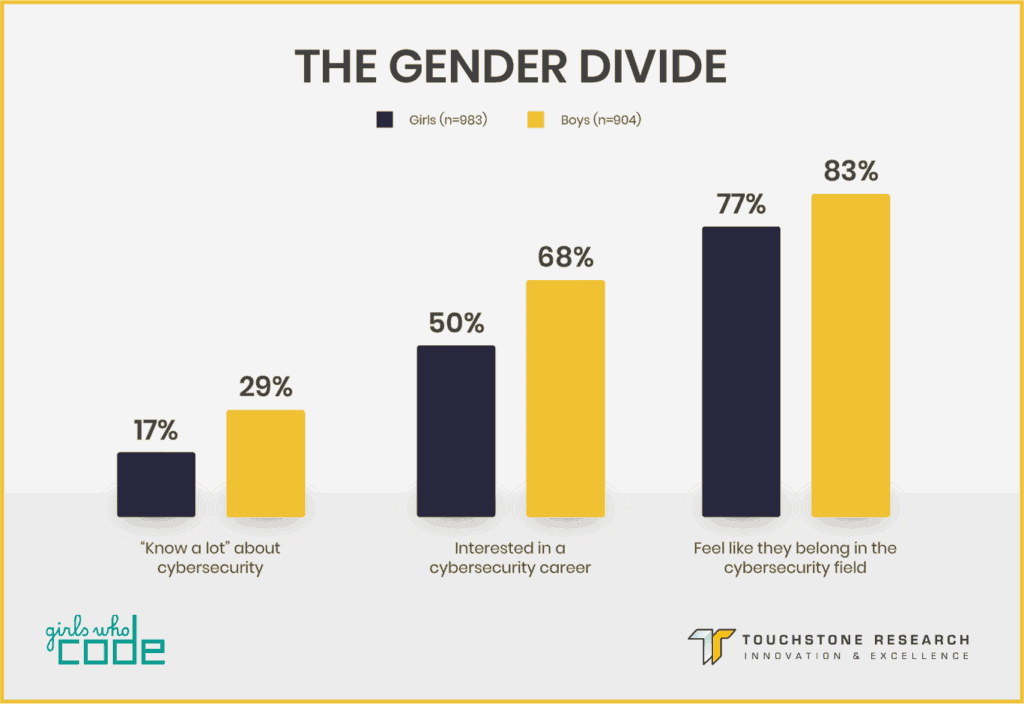
- While 97% of girls had heard of cybersecurity, only 17% felt they “knew a lot” about it.
- Implication: High-level visibility exists, but educational efforts must move beyond “awareness” to deepen comprehension and tangible skill-building.
Insight: The “Confidence Divide” is a Major Barrier
- 68% of boys expressed interest in cyber careers vs. only 50% of girls. Even when skills were equal, girls were less likely to feel they “belonged” in the field.
- Implication: Recruitment strategies must address imposter syndrome and explicitly foster a culture of belonging, rather than just teaching technical skills.
Insight: The “Peak Interest” Window is Narrow
- Curiosity about cybersecurity peaks between ages 15 and 16.
- Implication: Interventions must be timed precisely during this developmental window to have the maximum impact on career choices.
What Motivates Them
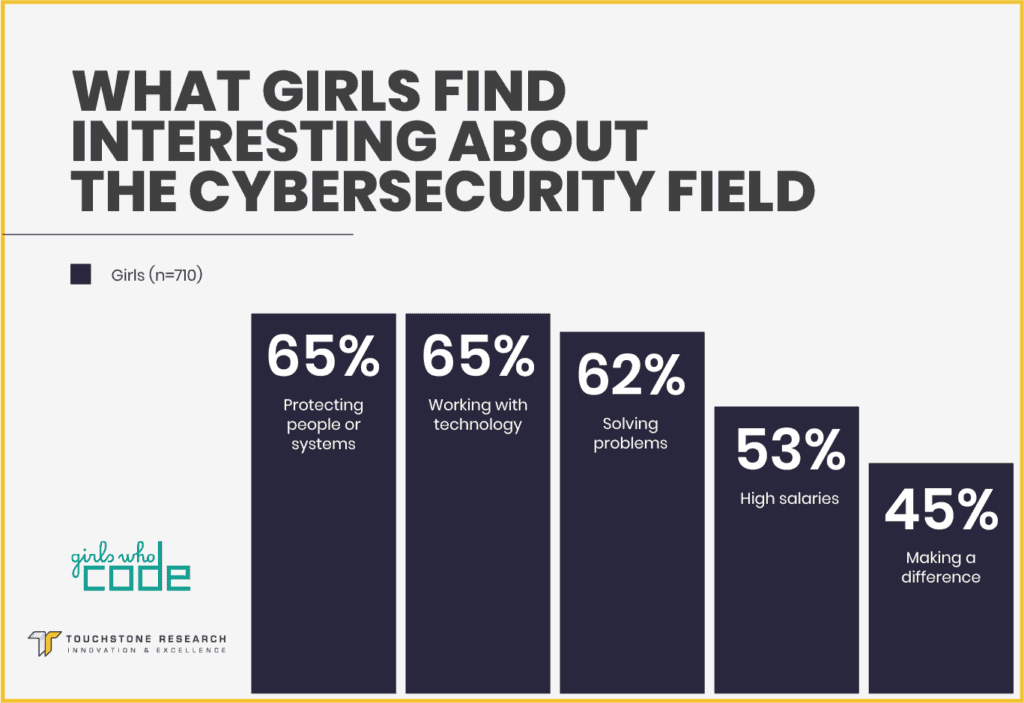
Girls are more engaged when cybersecurity is framed around:
- Protecting people (65%)
- Working with technology (65%)
- Solving problems (62%)
- Making a difference (45%)
Implication: Rebranding the industry from “coding in a dark room” to “mission-driven protection” is critical for engagement.
The Power of Programs and Mentorship
Girls who are familiar with cybersecurity are 16 times more likely to have learned about it through out-of-school-time (OST) programs like Girls Who Code. Yet only 28% of girls currently participate in these types of programs, highlighting a major opportunity for engagement.
Turning Insights into Action
The findings from this cybersecurity gender gap research formed the foundation of Girls Who Code’s Breaking Barriers: Girls and the Future of Cybersecurity Report, which calls on industry, education, and government to take collective action to address the cybersecurity gender gap.
The report uses these insights to outline targeted recommendations, including:
- Earlier intervention during the years when interest is highest
- Increased visibility of women in cybersecurity as role models and leaders
- Expanded opportunities for mentorship, hands on exploration, and skill building
These recommendations aim to increase representation and strengthen the future cybersecurity workforce.
“Touchstone Research was an invaluable partner on this project. Their deep expertise in youth research helped us uncover nuanced insights about how girls perceive cybersecurity careers. They helped us understand the story behind the numbers, giving us the evidence base we needed to advocate for meaningful change in closing the gender gap in cyber.” – Ryan Clarke, Vice President, Research and Strategy at Girls Who Code
Services Provided
- Quantitative Research
- Youth & Family Insights
- Young Adults / Gen Z Research
- Recruitment & Fieldwork
- Market Research for Technology
- Reporting and Analysis
Key Findings from the Cybersecurity Gender Gap Case Study
• Surveyed 2,105 teens nationwide
• Informed Breaking Barriers: Girls and the Future of Cybersecurity
• Identified key opportunities to increase girls’ participation and confidence in cybersecurity
• Provided evidence to guide Girls Who Code’s policies and education initiatives
• Helped frame the conversation around gender equity as a matter of both opportunity and national security
Read the Full Report:
Partner With Touchstone
Touchstone Research partners with mission-driven organizations to uncover insights that empower young voices and shape meaningful change. Whether your focus is education, technology, or social impact, our team can help bring your next research initiative to life.